

What Should A Business Website Contain?

What Should A Business Website Contain?

The design and content of a website will vary, depending on the site’s goals and field of expertise.

Here are some elements a website should include:

  • Clean and Simple Design: Any website should have a clean and simple design that is easy to navigate. Avoid using uncoordinated colors or flashy graphics that may distract visitors from reading your content, which is your goal. Responsive Design: It’s important to ensure that your website is optimized for different devices and screen sizes. A
    responsive design ensures that your website looks great on desktops, laptops, tablets, and mobile devices.
  • About Me Page: The About Me page is where visitors can learn more about the owner. It should include a short bio, a professional headshot, and a list of skills and experiences. A business site can include corporate or business history, and anything else of interest to visitors.
  • Portfolio: If you’re in any field that requires showcasing your work, a portfolio page is essential. This page should display your best work, and provide visitors with a sense of your skills and expertise. Designer, artist, writer samples of your work are important.
  • Contact Page: A contact page is essential for anyone who wants to get in touch with you. It should include a contact form or email address where visitors can send you a message. Almost any business should include their location (city/state at a minimum), and a phone number.
  • Blog: If you create content regularly, a blog is a great way to share your thoughts, ideas, and experiences. It can also help establish you as an authority in your field.
  • Social Media Integration: If you’re active on social media, it’s a good idea to integrate your profiles into your website. This will make it easy for visitors to connect with you on other platforms. Reposting content from your blog into social media is a smart tactic that pays dividends.

Depending upon your business, you could also include a map to assist in locating your shop, pricing page, resource page, individual product pages, testimonials or more.

Subscribe to our newsletter to be kept up to date on this topic, as well as marketing trends and more.
https://ameriwebhosting.com/subscribe.html


What Should A Business Website Contain?

How Often to Send Out Newsletters

How Often to Send Out Newsletters (Without Annoying Your Subscribers)

If you send out newsletters, you know it is a fantastic way to stay connected with your customers and prospects. But how often should you send them without annoying your subscribers?

  • Sending out too many emails can lead to unsubscribes
  • Sending out too few can make you forgettable
  • Finding that perfect balance is important. This ensures that you achieve success in your email marketing campaigns
  • Besides, your subscribers are more engaged and interested in your content when there’s a right balance in your email frequency
  • The best thing is that it also doesn’t make them feel overwhelmed or bombarded by excessive emails

If you ask me what is the ideal frequency in which you should send out your newsletters, I may not be able to give you the perfect answer.

That’s because the best frequency for your email newsletters depends on various factors including your business type. It may depend on the specific goals of your business, the nature of your audience, the type of content you share, and more.

A good rule of thumb is to send newsletters no more than once a week and no less than once a month. This range allows you to stay connected with your subscribers, without flooding their inboxes. And you can always adjust your mailings over time.

Many successful marketers have their own schedules for sending out their newsletters. And many of them don’t necessarily follow the above thumb rule.

According to research, 33.33% of marketers send out email newsletters on a weekly basis, and 26.7% send out on a monthly basis. It also revealed that 13.3% of marketers send it out on a daily basis.

We send our own newsletter out monthly, because it seems to work for us.

Some marketers segment their mailing lists, and allow their subscribers to choose the frequency. Nice! Whatever method you choose, the use of a newsletter is an efficient way to stay in touch with your customers and prospects.

Subscribe to our newsletter to be kept up to date on this topic, as well as marketing trends and more.
https://ameriwebhosting.com/subscribe.html

TOP TECH TIPS – Spyware

TOP TECH TIPS – Spyware

TOP TECH TIPS – Spyware

Marc AnthonyDo you have an antivirus program on your computer? That’s an excellent way to waste money and slow your PC down by 90%. It turns out viruses stopped happening in 2013. Yes, 2013. Threats still occur, but they’re far beyond viruses now. Unfortunately most local computer guys haven’t learned this yet, so they’re doing virus scans wondering why they can’t find anything.

Today let’s talk about New Threat #1: LEGALIZED SPYWARE
It’s not like someone banged a gavel and declared spyware to be legal – but rather, the bad guys discovered that as long as they use certain keywords, or claim to help you in some way, they can spy on you legally. Here are some examples:

“Toolbars” claim to help you find maps, track packages, or save PDFs, but instead hijack your web browser’s homepage, intercept your online searches, and then sell your online behavior.

“Customer Participation Programs” / “Customer Experience Improvement Programs” sneak in alongside your printer drivers. It presumably records your printing behavior and claims to help the manufacturer improve its future products, but when have printers improved?

“Cleaners”/ “Optimizers” use smoke & mirror tactics to convince you that you have “errors” in your machine. They then promise to clean it for a one-time or even monthly fee, but inevitably slow it down.

So if your computer is slow, it has nothing to do with it being old, or it having viruses. In reality, it’s likely infected with fully legalized spyware. All you have to do is uninstall it and your machine will be faster than ever.

Top Tech Tips brought to you by Marc-Anthony Arena, The Computer Exorcist. He explains tech concepts, scams, and scandals in Plain English, and teaches technicians how to protect consumers. Find his book and podcast at TheComputerExorcist.com

A Journey Through Time: Exploring the History of Hinsdale, Illinois

A Journey Through Time: Exploring the History of Hinsdale, Illinois

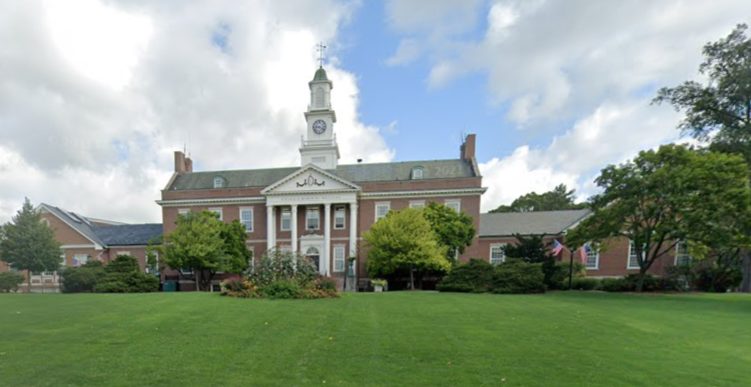
Hinsdale ILHinsdale, Illinois, boasts a rich and vibrant history spanning nearly two centuries. Its journey began with Native American settlements along Salt Creek, transitioned through a stagecoach stop and bustling hub, and blossomed into the charming and affluent suburb it is today. So, buckle up and let’s explore some key eras:

Early Days (Pre-1860s):

  • Home to indigenous communities for centuries, the land was known for its abundance of natural resources.
  • European settlers arrived in the 1830s, establishing Brush Hill, a small community with taverns, mills, and stores.
  • The Black Hawk War’s conclusion in 1833 opened the area for further development.

Founding and Growth (1860s-1900s):

  • The arrival of the Chicago, Burlington & Quincy Railroad in 1862 propelled significant change.
  • Businessman William Robbins envisioned a vibrant community and purchased land around the tracks, later named Hinsdale.
  • Incorporation in 1873 marked a new chapter, followed by rapid growth with modern amenities like waterworks, electricity, and paved roads.
  • By the late 1890s, Hinsdale’s reputation as a desirable suburb solidified, attracting middle-class families and boasting stunning architecture.

20th & 21st Centuries:

  • Post-1900 saw further expansion with new downtown buildings, residential areas, and the iconic train station.
  • The 20th century witnessed the development of landmarks like the Hinsdale Golf Club and Ruth Lake Country Club.
  • Today, Hinsdale remains a sought-after suburb, balancing history with modern amenities and a strong sense of community.

Further Exploration:

  • Hinsdale Historical Society: This organization meticulously preserves Hinsdale’s past through exhibits, programs, and archival collections.
  • Village of Hinsdale Website: The official website offers a dedicated section on the village’s history, including detailed timelines and historical photographs.
  • Encyclopedia of Chicago History: This online resource provides a concise overview of Hinsdale’s development, offering valuable insights.

I hope this brief overview piques your interest in Hinsdale’s rich history. Remember, these are just glimpses – dive deeper to discover the stories, personalities, and events that shaped this unique community!